
Introduction
Confidence doesn’t come from big moments.
It grows in the small, everyday things.
As a mum, I’ve seen how confidence can look different in each child.
One child may speak up easily, while another takes a little more time.
And sometimes, what looks like “shyness” is simply a child still learning to feel sure of themselves.
Over time, I’ve realised something important:
Confidence isn’t something we force, it’s something we build, gently and consistently.
🟡 Quick Takeaways
- Confidence grows through everyday experiences
- Small encouragement makes a big difference
- Children build confidence at their own pace
- Support matters more than pressure
What Confidence Really Looks Like in Children
Confidence doesn’t always mean being loud or outgoing.
Sometimes, it looks like:
- Trying something new
- Speaking up, even a little
- Keeping going after a mistake
These small moments matter more than we realise.
👉 Have you noticed how your child reacts when they try something new?
1. Let Them Try (Even If It’s Not Perfect)
It can be tempting to step in quickly and help.
But children build confidence when they try things themselves, even if it’s messy or slow.
Simple things like:
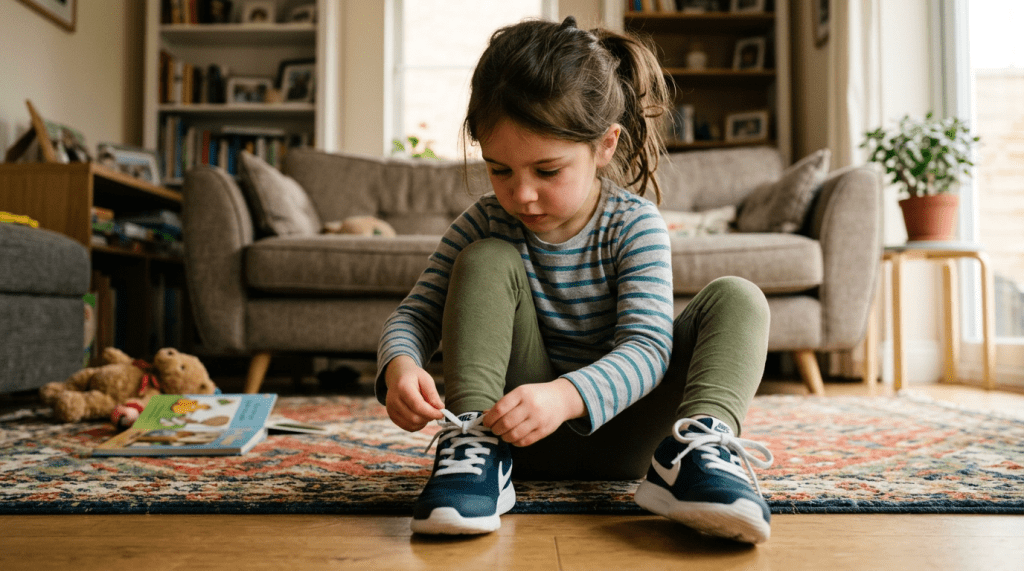
- Putting on their shoes
- Helping with small tasks
- Trying to solve a problem
These everyday moments build a sense of “I can do this.”
One thing that has helped in my home is using simple, child-friendly tools that encourage independence.
👉 For example, a sturdy toddler step stool makes it easier for children to reach the sink or help in the kitchen
🔗 Kids Step Stool
2. Notice Effort, Not Just Results
Instead of focusing only on the outcome, notice the effort.
You can say:
👉 “You really tried hard with that.”
This helps children understand that effort matters not just getting things right.
In our home, I’ve also used simple reward charts to gently encourage effort, especially when building new habits.
3. Give Small Responsibilities
Children feel more confident when they feel capable.
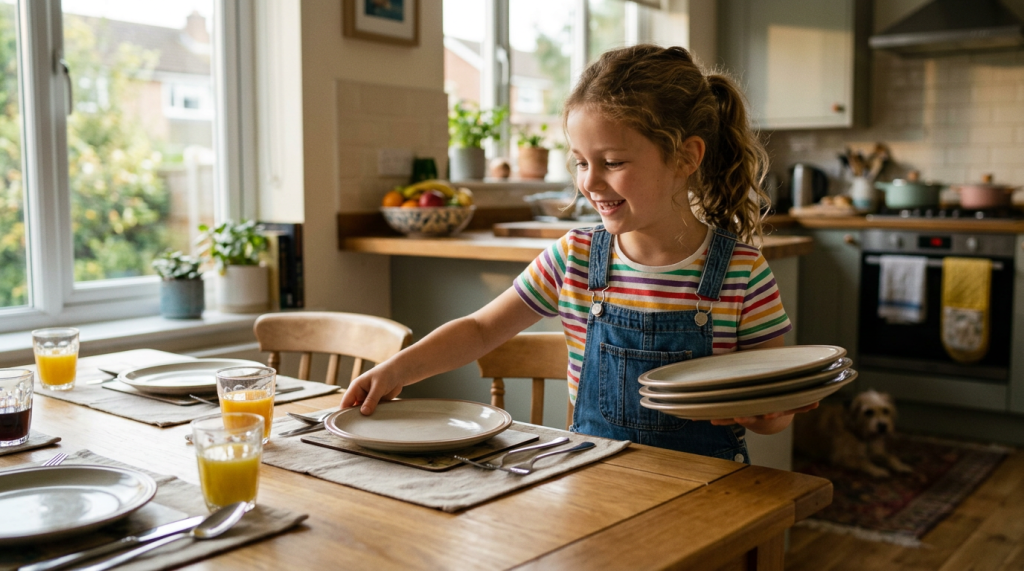
Giving them small responsibilities helps build that feeling.
For example:
- Helping set the table
- Tidying up toys
- Packing their school bag
Sometimes, having their own space makes this easier.
👉 Simple tools like kids storage organisers or toy storage boxes help children manage their own things
🔗 Here is a link to one I use at home Storage Organiser
4. Allow Mistakes Without Pressure
Mistakes are part of learning.
When children feel safe to make mistakes, they are more willing to try again.
Instead of correcting quickly, you can say:
👉 “That’s okay, let’s try again.”
Activities that involve trial and error help naturally.
👉 Building blocks or simple puzzles are great for teaching patience and problem-solving
5. Be Calm and Encouraging
Children often look to us to understand how to feel.
If we stay calm and encouraging, they begin to feel more secure.
Even small words like:
- “You’ve got this”
- “Take your time”
can make a big difference.
Some parents also find that books can support this.
👉 Gentle confidence-building books for children can help reinforce positive messages
6. Avoid Comparing Them to Others
Every child develops at their own pace.
Comparing can make children feel unsure of themselves.
Instead, focus on their own progress—even if it’s small.
Confidence grows when children feel accepted for who they are.
What I’ve Learned Over Time
Confidence doesn’t grow overnight.
It builds slowly, through everyday experiences, patience, and encouragement.
Some days your child will feel sure of themselves.
Other days, they may need more support.
And that’s completely normal.
Conclusion
Building confidence doesn’t require big changes.
It comes from small, consistent moments:
- Letting children try
- Encouraging effort
- Giving them space to grow
Over time, these small moments make a big difference.
👉 What helps your child feel more confident? I’d love to hear what works in your home.
💬 Final Thought
Confidence grows when children feel supported, not pressured.
And sometimes, the smallest encouragement can stay with them for a lifetime.
You Might Also Like
👉 Why Your Child Isn’t Listening (And What to Do Instead)
👉 10 Positive Discipline Techniques That Actually Work
👉 What to Do When Your Child Says “I’m Bored
 Smart Parent Guide
Leave a comment