
Introduction
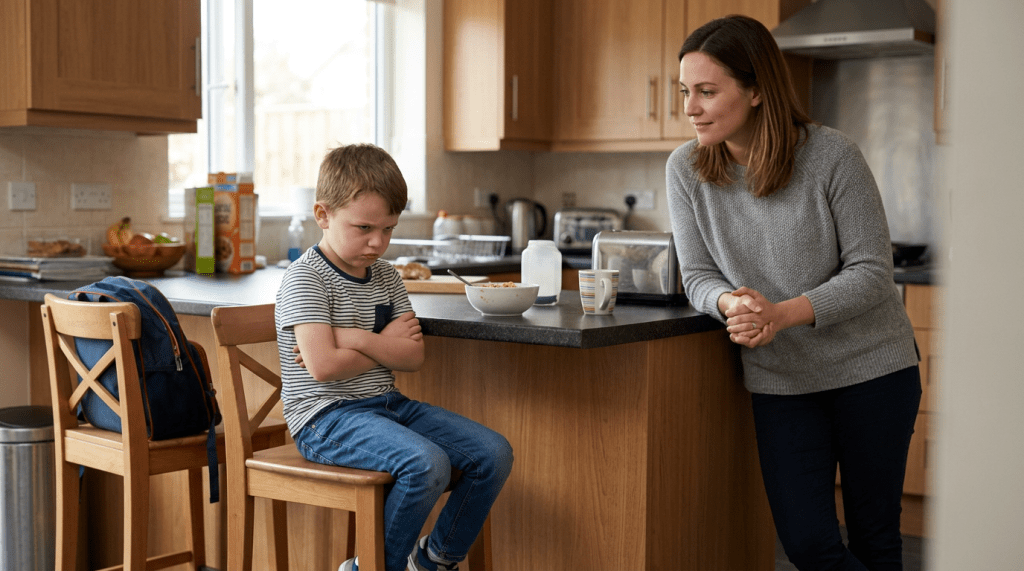
“Mum, no.”
“I don’t want to.”
“I’m not doing it.”
If you hear this often, you’re not alone.
As a mum, I’ve had many moments where even the simplest things getting dressed, brushing teeth, tidying up, turn into a back-and-forth.
It can feel frustrating, and sometimes exhausting.
But over time, I’ve realised something important:
Children don’t always say “no” to be difficult.
Often, they are trying to feel understood, independent, or in control.
When you look at it this way, it becomes easier to respond calmly instead of reacting.
🟡 Key Takeaways
- Saying “no” is a normal part of development
- Children often want control, not conflict
- Calm responses work better than pressure
- Small changes can reduce daily struggles
Why Children Say “No” So Often
Children are still learning how to express themselves.
Saying “no” is one of the easiest ways for them to:
- Feel in control
- Test boundaries
- Express emotions
This is especially common in younger children.
👉 Have you noticed your child says “no” more when they’re tired or overwhelmed?
That’s usually not a coincidence.
1. They Want a Sense of Control
Children don’t get to make many decisions in their day.
So when they can say “no,” they use it.
Instead of seeing it as defiance, it can help to see it as a need for independence.
2. They Feel Overwhelmed
Sometimes, what we ask feels simple to us, but not to them.
When a child is tired, hungry, or overstimulated, even small tasks can feel like too much.
That’s when resistance shows up.
When children feel overwhelmed, having something calming they can focus on can really help. Simple tools like sensory toys or calming objects can give them a way to regulate their emotions instead of reacting with “no.”
👉 You can explore a simple option here: : Sensory / Fidget Toy
3. They Are Testing Boundaries
This is a normal part of growing up.
Children are learning:
- What happens if I refuse?
- Will the rule stay the same?
Consistency helps them feel safe, even if they push back.

What to Do Instead (Simple, Calm Approaches)
1. Offer Simple Choices
Instead of:
👉 “Put this on now.”
Try:
👉 “Do you want this one or that one?”
This gives your child a sense of control while still guiding the outcome.
You can also make cooperation more positive by using a simple reward system. A visual reward chart can help children feel motivated and give them a sense of progress.
👉 Example: Kids reward chart
2. Stay Calm (Even When It’s Hard)
It’s easy to react quickly—I’ve been there too.
But children respond more to your tone than your words.
A calm voice often settles things faster than raising your voice.
3. Acknowledge Their Feelings
Sometimes, children just want to feel heard.
You can say:
👉 “I know you don’t want to do this.”
Then gently guide them anyway.
Feeling understood can reduce resistance.
If you’d like to understand this approach more deeply, there are helpful parenting resources that explain how children think and why connection works better than control.
👉 A good example is: The Whole-Brain Child
4. Keep Boundaries Clear
Being calm doesn’t mean giving in.
You can be gentle and firm at the same time:
👉 “I understand, but we still need to get dressed.”
This balance is powerful.
5. Keep Instructions Simple
Too many instructions can feel overwhelming.
Break things down into small steps:
👉 “First, put your shoes on.”
Then move to the next step.
Conclusion
If your child keeps saying “no,” it doesn’t mean something is wrong.
It’s often a sign they are learning independence and testing boundaries.
With calm responses, simple choices, and consistency, these moments can become easier to manage.
👉 What situations do your children say “no” the most? I’d love to hear what it looks like in your home.
💬 Final Thought
Sometimes, “no” isn’t about refusing.
It’s about being heard.
You Might Also Like
👉 Why Your Child Isn’t Listening (And What to Do Instead)
👉 10 Positive Discipline Techniques That Actually Work
👉 What to Do When Your Child Says “I’m Bored”


Leave a Reply