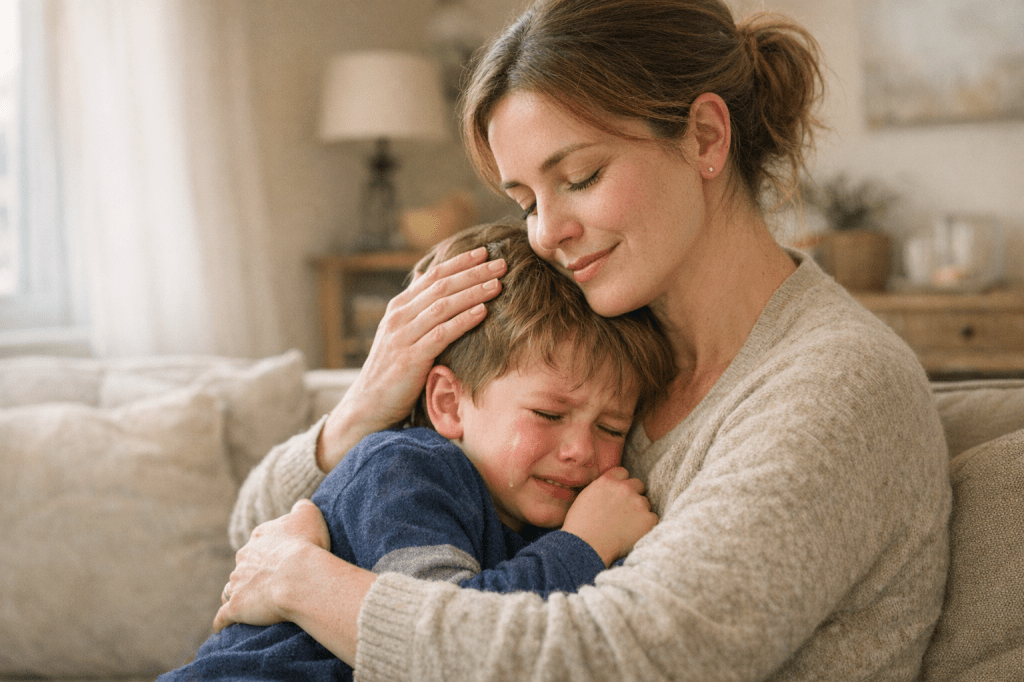
Do your children sometimes feel overwhelmed, frustrated, or unable to explain how they feel? Helping children manage big emotions can be hard, but with the right approach, it can become much calmer and easier for both you and your child.
Introduction
As a mum, I have seen all kinds of emotions: tears, frustration, excitement, anger… sometimes all in one day.
There are moments when something small suddenly turns into a big reaction. As a parent, it can feel confusing and even stressful trying to respond the “right” way.
From my experience, I have learned something important:
Children are not trying to be difficult, they are still learning how to handle their feelings.
Growing up in an African home, emotions were guided with patience, respect, and support from others. Now, as a parent, I bring those values into my home, using simple and gentle ways to help my children feel understood.
Children don’t need perfect parents, they need calm and patient guidance.
🟡 Key Takeaways
- Big emotions are a normal part of growing up
- Children need guidance, not punishment
- Staying calm helps your child calm down faster
- Learning emotions takes time
1. Stay Calm and Be There
When your child is upset, how you react really matters.
I have learned that when I stay calm even when it’s hard my children calm down faster too.
Instead of reacting quickly, pause, take a breath, and stay close to your child.
Your calmness helps your child feel safe.
2. Name and Understand Their Feelings
Sometimes children act out because they don’t know how to explain what they feel.
You can help by using simple words like:
- “I can see you’re upset”
- “That made you angry, didn’t it?”
In my home, I have noticed that when my child feels understood, the situation often improves quickly. When children feel heard, they begin to calm down.
3. Teach Simple Ways to Calm Down
When a child is overwhelmed, telling them to “calm down” rarely works.
In my home, I keep it very simple.
For example, I might say:
- “Let’s take a deep breath together” (and do it with them)
- “Come, let’s sit here for a moment”
- “Do you want a hug or some quiet time?”
Sometimes, with my younger child, I even turn it into something playful:
- Blowing out “birthday candles” (deep breathing)
- Counting slowly together
- Holding a favourite toy to feel safe

The key is guiding them through it, not expecting them to figure it out alone.
Over time, I’ve noticed that my children begin to use these small techniques by themselves, which is such a big win. Children don’t just learn to calm down, they learn it through us.
4. Set Gentle but Clear Rules
It’s okay for children to feel angry, sad, or upset but some actions are not okay.
I gently remind my children:
“It’s okay to feel angry, but it’s not okay to hit.”
This helps them learn the difference between feelings and behaviour.
Clear and calm rules help children feel safe and guided.
5. Be Patient
Learning to handle emotions takes time. From my experience with children, I’ve seen that this doesn’t happen overnight.
Some days will go well, and some days will be hard and that is normal.
What matters is being patient, calm, and consistent.
Over time, your child will learn better ways to express their feelings.
Conclusion
Helping children manage big emotions is not about stopping their feelings. It’s about guiding them through those feelings in a calm and supportive way.
As a parent, you are teaching your child something very important, how to understand and handle emotions.
And even on the hard days, remember:
The way you respond today is helping shape your child’s future.
💬 Final Thought
If you found this helpful, you might also enjoy:
 Smart Parent Guide
Leave a comment