
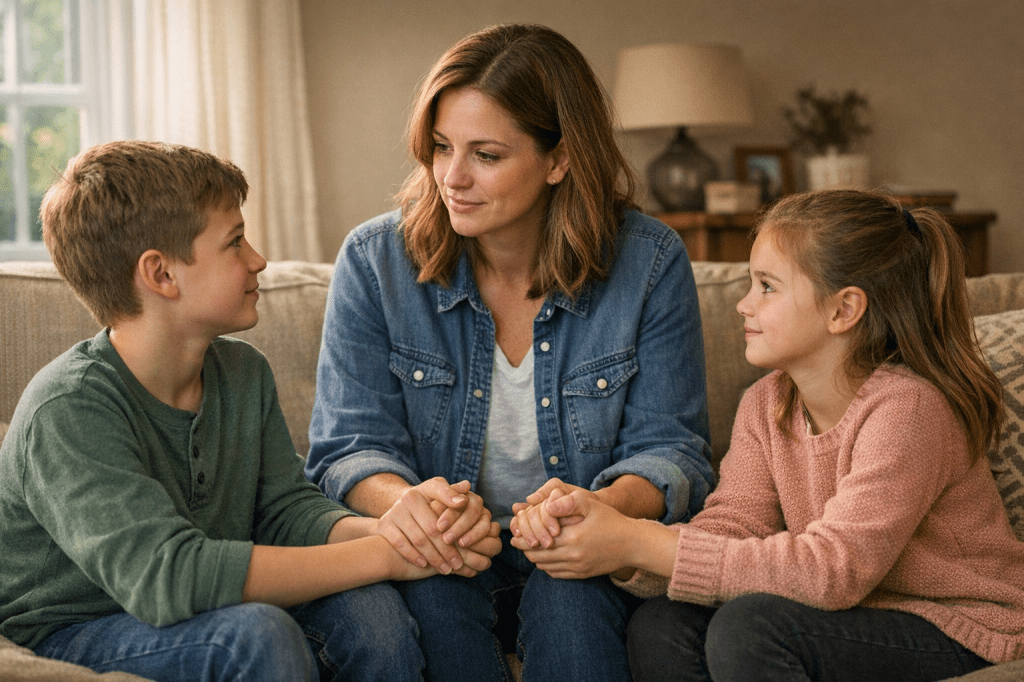
Struggling with constant battles, shouting, or power struggles at home?
These positive discipline techniques will help you guide your child’s behaviour calmly—without stress, guilt, or losing connection.
Introduction
As a mum of four girls, I understand just how challenging discipline can be. Some days are calm and beautiful… and other days feel like a constant cycle of “Mum!” “She did this!” “I don’t want to!”
Through my experience in teaching, child psychology, and working closely with children and families, I’ve learned that discipline is not about control or punishment—it’s about guidance, patience, and connection.
Growing up in an African home, discipline was important, but so was respect, community, and learning through everyday life. Now, as a parent, I try to blend that upbringing with gentle, positive approaches that truly work in real life.
If you’re dealing with frequent meltdowns, you may also find this helpful:
👉 7 Positive Ways to Handle Toddler Tantrums Without Shouting
Here are 10 positive discipline techniques that I use in my home—and that can make a real difference in yours too.
1. Be Consistent with Rules
Children feel more secure when they know what to expect. In my home, I’ve learned that if I say something once, I need to follow through.
If bedtime is 8pm, it stays 8pm. When rules change every day, children get confused and naturally push boundaries more.
Consistency builds trust—and over time, things become easier.
2. Focus on Teaching, Not Punishing
With my background in education, I always remind myself: every mistake is a chance to teach.
Instead of reacting quickly, I pause and ask: “What can my child learn from this?”
For example, if one of my girls makes a mess, we clean it up together instead of shouting. It teaches responsibility in a calm, supportive way.
3. Use Time-In Instead of Time-Out
This has been a big shift in our home.
Instead of sending a child away when emotions are high, I bring them closer. We sit together, talk, or sometimes just share a quiet moment.
Children don’t always need isolation—they need help understanding what they feel. This has especially helped my younger child regulate her emotions better.
4. Praise Positive Behaviour
With four children, it’s easy to notice what’s going wrong. But I’ve learned to intentionally notice what’s going right.
Simple words like:
“Well done for sharing”
“I’m proud of how you handled that”
These small praises go a long way. Children naturally repeat behaviour that feels seen and appreciated.
5. Offer Choices
Children love feeling in control—and honestly, it reduces so many daily struggles.
Instead of saying, “Put this on now,” I say:
“Do you want this one or that one?”
It works like magic most mornings, especially during the school rush!
6. Model Good Behaviour
As a parent—and someone who has worked closely with children—I know they are always watching.
If I shout, they shout. If I stay calm, they learn calmness.
Even on difficult days, I try to model the behaviour I want to see: respect, patience, and kindness.
7. Stay Calm (Even When It’s Hard)
I won’t pretend this is easy—because it isn’t, especially with four children!
But staying calm has made a huge difference in my home. When I lower my voice instead of raising it, the situation often settles much faster.
In many African homes, we’re taught that calm authority carries more weight than anger and I truly see the value of that now.
8. Set Clear and Loving Boundaries
Children need boundaries—they actually feel safer with them.
I make it clear what is okay and what is not, but I do it calmly:
“I understand you’re upset, but we don’t hit.” Firm but gentle—that balance is everything
9. Create Simple Family Routines
With four girls, routines are my lifesaver.
Morning routines, homework time, bedtime routines—they reduce stress and help everyone know what comes next.
Children behave better when their world feels predictable and structured.
10. Be Patient with the Process
This is something I remind myself daily: children are still learning.
From my experience working in care and education, I’ve seen that emotional development takes time. There is no “perfect child” and no “perfect parent.”
Some days will be messy, loud, and exhausting—and that’s okay.
What matters is showing up with love, patience, and consistency.
Conclusion
Positive discipline is not about being soft—it’s about being intentional.
As a mum, an educator, and someone who has worked closely with children, I’ve seen that the best results come from connection, not fear.
Our children are learning from us every day—through our words, our actions, and how we respond in difficult moments.
And sometimes, the smallest changes we make today can shape the kind of adults they become tomorrow.
💬 Final Thought
If you found this helpful, you might also enjoy:
👉 7 Positive Ways to Handle Toddler Tantrums Without Shouting
And don’t forget to bookmark Smart Parent Guide for simple, real-life parenting tips that actually work.
 Smart Parent Guide
Leave a comment